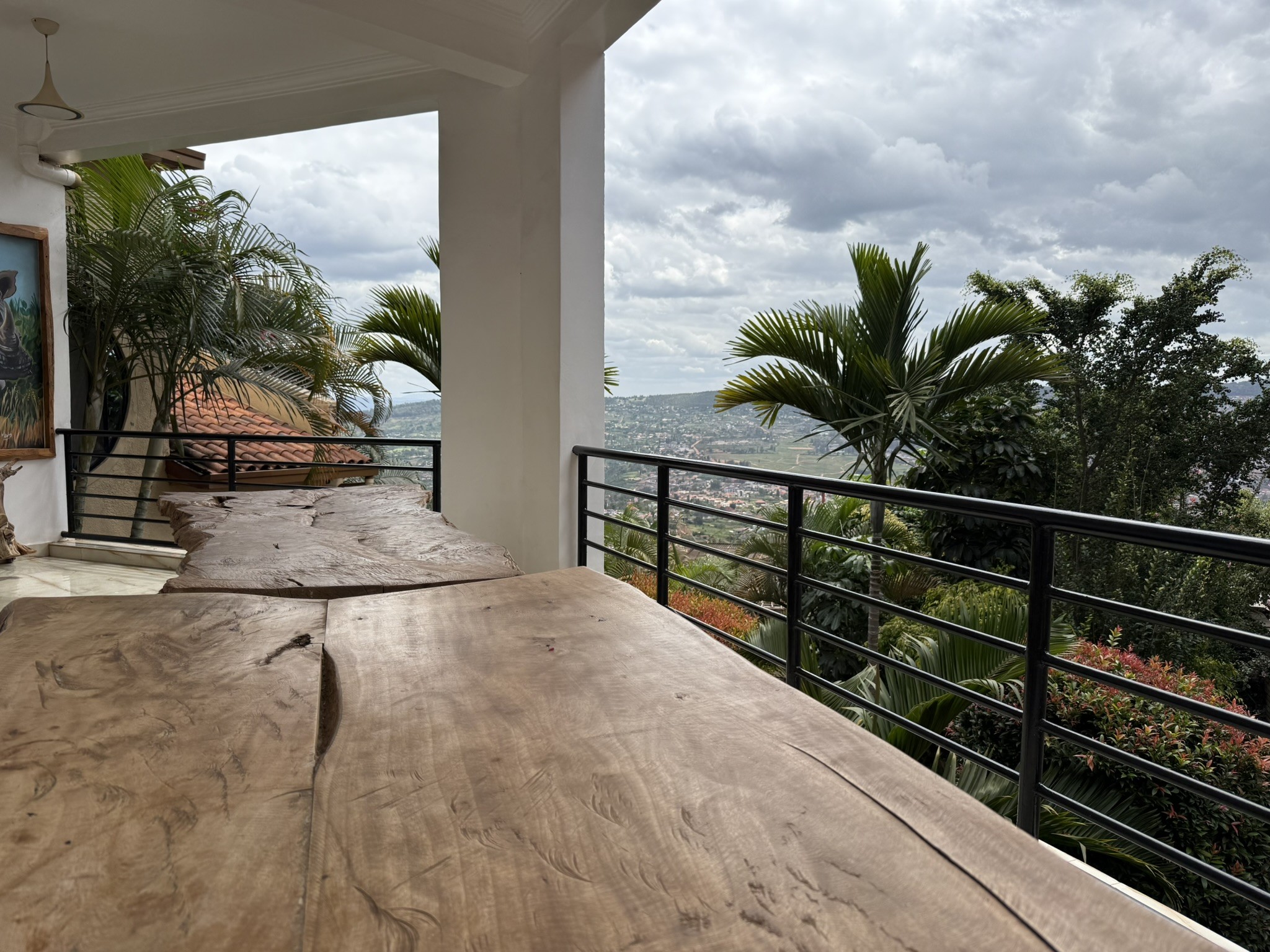
As I sat on the balcony of the villa one last time, I ended this part of the journey the same way I began it. Laptop open on the table, listening to the sounds of birds, workers constructing the building next door by hand, and someone sweeping the parking area below. The rhythm was familiar. What was different was the absence of the teens who had filled this place with so much life over the past week. They flew home last night. I am both sad to see them go and deeply grateful for the memories and experiences they carry with them. My prayers follow them as they travel.
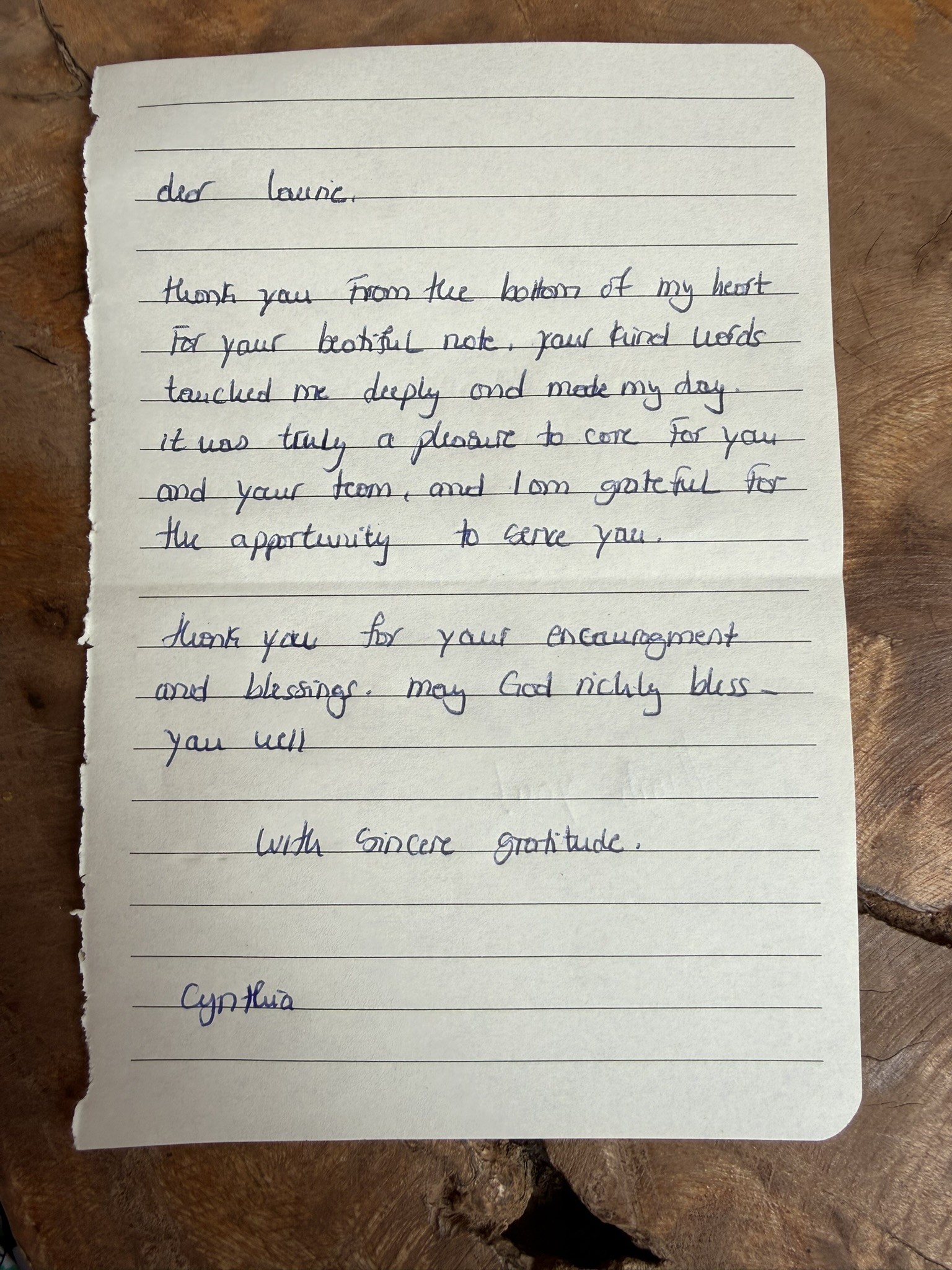
This morning I handed Cynthia our notes of encouragement for her and the staff at the guesthouse. She received them with that same wide smile she’s worn every day we’ve been here. A little while later she came back with a note for me and one for the team. She said the notes made her whole day. Her joy felt like confirmation that the unseen acts of care — the small words, the quiet thanks — matter more than we sometimes realize. I climbed into the van with Mapendo feeling grateful for the work that has been done and the community that has formed around it.
The Conversations You Cannot Plan
We spent the morning at ATN. Two of the women there had asked to speak with me more, and I was honored to sit with each of them. The first is someone I had spoken with briefly before, but today she shared more of her trauma history and her fears about the future. The second walked into the room much more timidly. She apologized for her English at the beginning, though we ended up talking for an hour. She shared openly — in a way she said she has not shared with anyone else before. We talked about pain, survival, faith, and what it means to keep moving when the road behind you is heavy and the road ahead is uncertain.
I love all parts of these trips — the sessions, the planning, the teaching, the logistics. But the unplanned conversations like these are a reminder that trauma-informed work is not just a framework you teach; it is a posture you carry into one-on-one moments when someone decides you are safe enough to trust with their story.
The unplanned conversations are often the ones that stay with me the longest — the moments when someone decides you are safe enough to trust with a story they have never spoken aloud.
Four of us stayed for lunch together. We had agatogo — a staple Rwandan dish where you combine what you have into a stew. It was so good. We followed it with African tea, warm and spiced, and then walked back to the van.
The Road to Rwanda Children
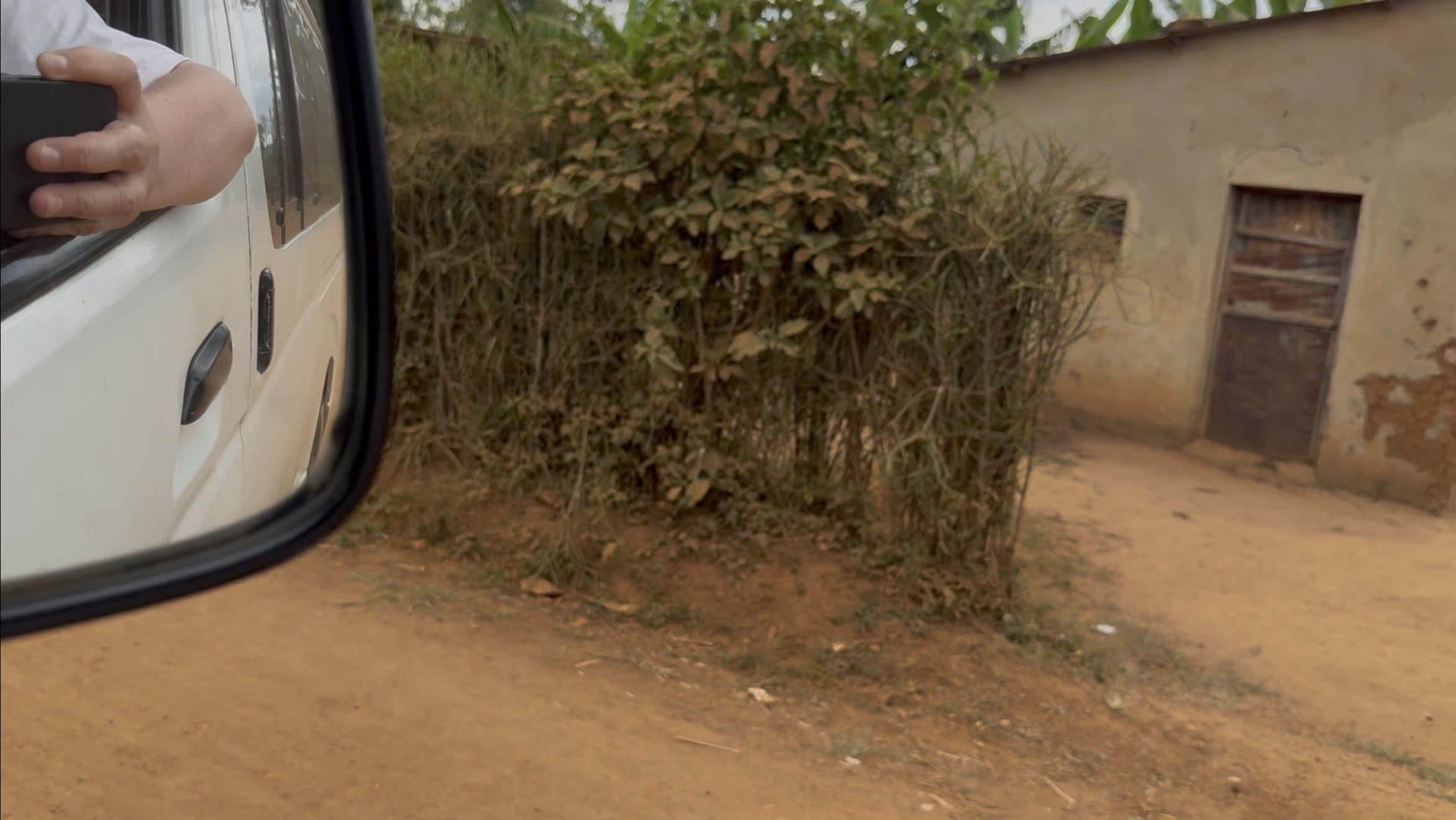
We drove out through ATN’s gates and made our way toward Rwanda Children Christian School. The RCCS campus is only about twenty minutes from ATN, but the drive feels like the crossing of a threshold. Just past the Ntarama Genocide Memorial, the paved road ends. From there, the route winds through villages along a red dirt road. The contrast between the Kigali city streets and this stretch of countryside is stark. As we bumped along, I found myself thinking that perhaps the students should have experienced this road, too — to see yet another side of Rwanda’s story.
After maybe seven minutes on the dirt road, we turned left into the RCCS campus. Every time I arrive, I am reminded how set apart this place is. It feels both deeply rooted in its surroundings and somehow set aside for something particular. On the drive, I had been thinking about the differences between X-tra Mile Academy and Rwanda Children Christian School. They share a mission and many of the same ministries, yet they are also distinct in personality and context. In the van, Mapendo said, “They are like cousins,” and I completely agreed. Related. Different. Both beloved.
We unloaded my luggage from the van. As we walked toward the guest house, Mapendo looked at the pile and asked, half joking, if all the bags were really for just one person. I assured him they were all mine, but explained that many were full of donations. Suitcases heavy with medical supplies, educational materials, and electronics can look extravagant from the outside; inside, they are full of other people’s generosity.
Unpacking What Others Sent
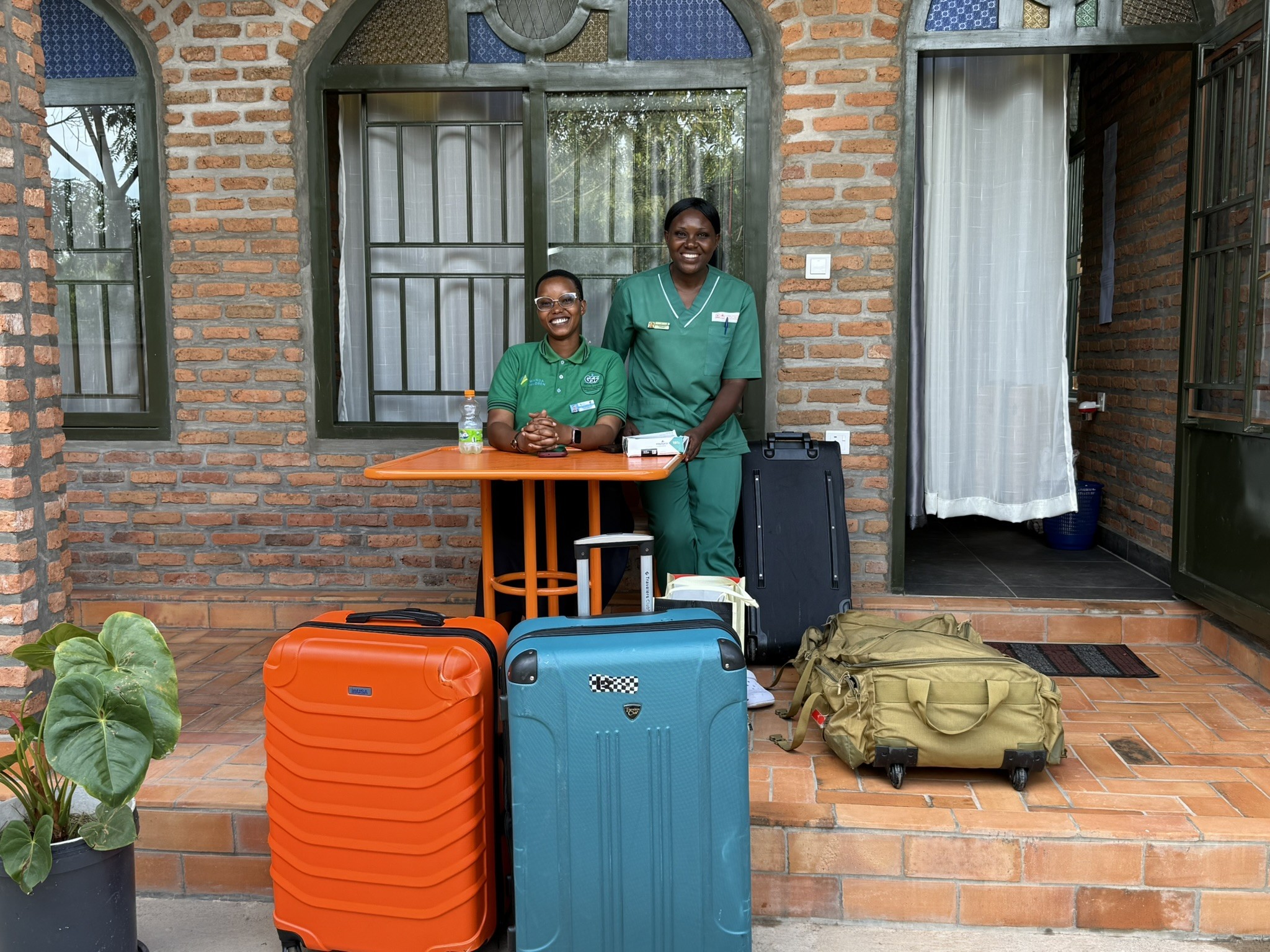
The team dropped my bags in the guest house and then we headed to the dining hall for drinks, which quickly turned into lunch. I told them I had already eaten at ATN, but Mapendo shook his head and said, “That wasn’t a lunch.” I thought the meal at ATN was plentiful and delicious. Then John, the chef, brought out bowls of what may be the best mushroom soup I have ever eaten — rich, comforting, made with obvious care. Fresh rolls and fruit followed. RC has a campus bakery, and all the bread served here is made there. Somehow you can taste the difference between bread that traveled across a city and bread that traveled across a courtyard.
The evening was spent unpacking the suitcases of supplies so many generous people had helped send. One by one, items moved from luggage to their new homes — medical supplies into the hands of those who will use them, educational materials into spaces where children will learn, electronics into the care of staff who will steward them well. It felt like the physical expression of all the support that had been quietly building long before this plane ever left the ground.
As the sun went down, the day settled into a quieter rhythm. No team to debrief with in the villa tonight. No line of students waiting for dinner. Just the sound of evening in this place and the awareness that the work is shifting into a new phase.
The first part of this journey has ended. Another is beginning.
ATN and Rwanda Children share a similar mission and many of the same ministries, but they are not twins; they are cousins — related, distinct, and both deeply loved.