3:30 a.m. came early after staying up late writing notes of encouragement. By the time we gathered in the dark outside the villa, eyes were heavy but spirits were high. Today was safari day. The journey from the villa to Akagera National Park takes about three hours, and we wanted to arrive before the school buses and larger tour groups crowded the gate. Even so, we still made time for a stop at a coffee shop on the way. Some habits are worth preserving, even on safari days.
Our group filled a caravan of five pop-top Land Cruisers. These were the nicest safari vehicles I’ve ridden in so far, and our guide was phenomenal — attentive, knowledgeable, and determined that we would see as much as possible. As we entered the park, we barely had time to settle into the pattern before we encountered rangers. Our guide stopped near them and pointed.
A white rhino stood in the tall grass to the right.
One of the “Big Five,” spotted within minutes of entering the park. It felt like the day was making a promise.
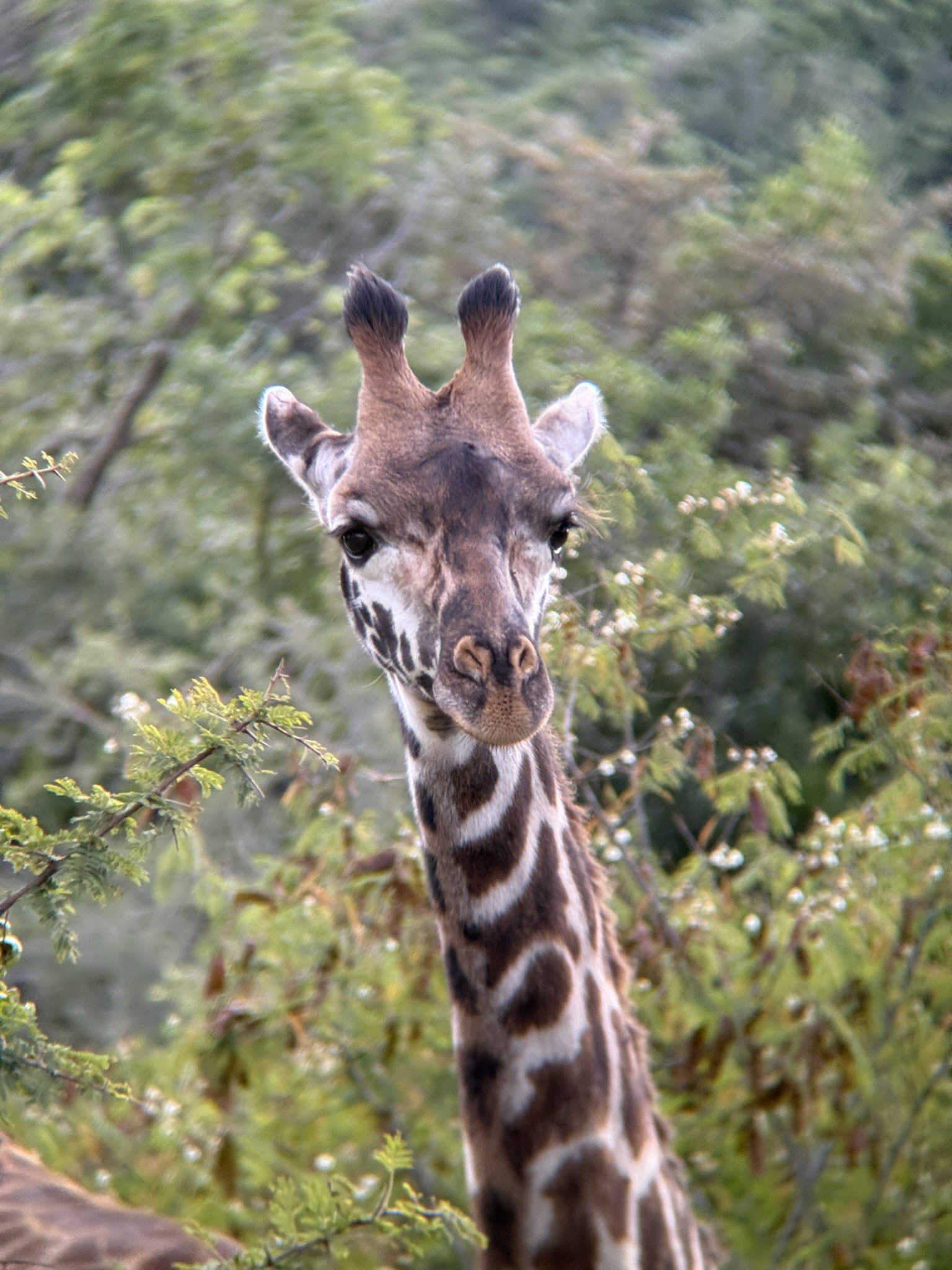
From there, the sightings came steadily. Giraffes standing tall and unhurried against the horizon. Cape buffalo grazing in groups. Antelope and impala darting through the grass, their movement almost too quick to track. Hippos and crocodiles sharing the same waters at a distance that felt uncomfortably close to one another, and yet completely normal for them. Zebras with their impossibly precise stripes. Birds in more shapes and colors than I could name. The kind of variety that reminds you how expansive God’s imagination really is.
Elephants on the Road
It is the end of the rainy season, which can make some sightings more challenging. Our guide worked hard to find elephants for us, scanning the landscape, listening to news from other guides, and watching for subtle signs in the distance. Eventually, he pointed out a few elephants far off, playing in the water. Even from that distance, they were magnificent — massive, gentle, somehow both powerful and playful at once.
We watched for a while, grateful, and then turned to head back to the road.
That’s when the herd appeared.
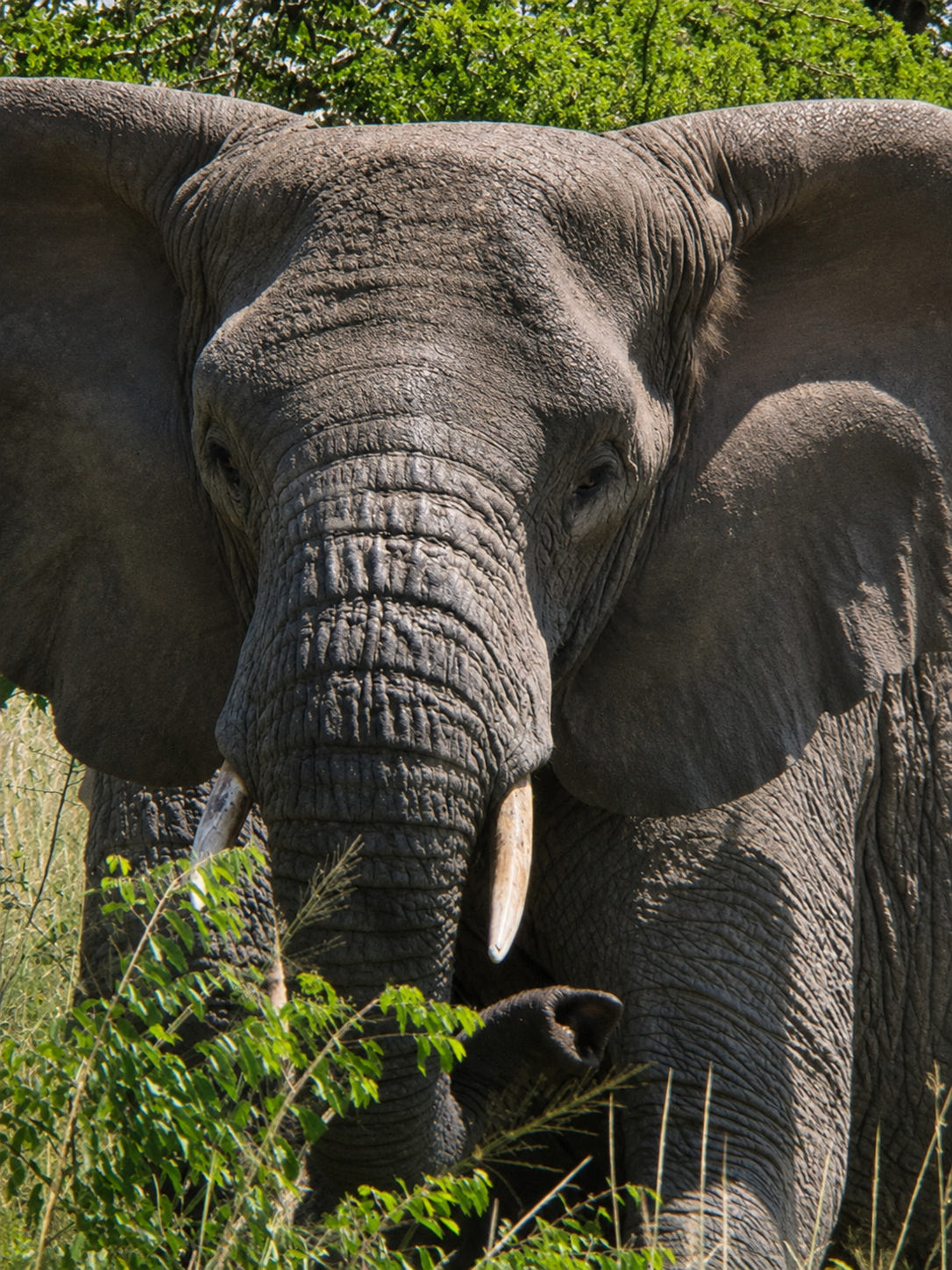
As we looked up the road, a group of elephants was moving directly toward us along the track. We sat still as they approached. They passed so close that it felt like we could reach out and touch them, though of course we did not. I fumbled for my camera as they approached, but I was in awe. They are majestic. As the first group passed, I focused my lense and began to capture as much as possible. Some things you cannot capture. The sound of their footsteps, the swish of their tails, the low rumble you feel more than hear — it all pressed into the memory in a way that will stay.
We stopped at a picnic area for lunch, sharing food and stories from each vehicle: who had seen what first, who had missed the rhino because they were looking the other direction, who was still grinning from the elephant encounter. Then we began the journey toward the northern part of the park.
We Did Not Expect Lions
We did not expect lions.
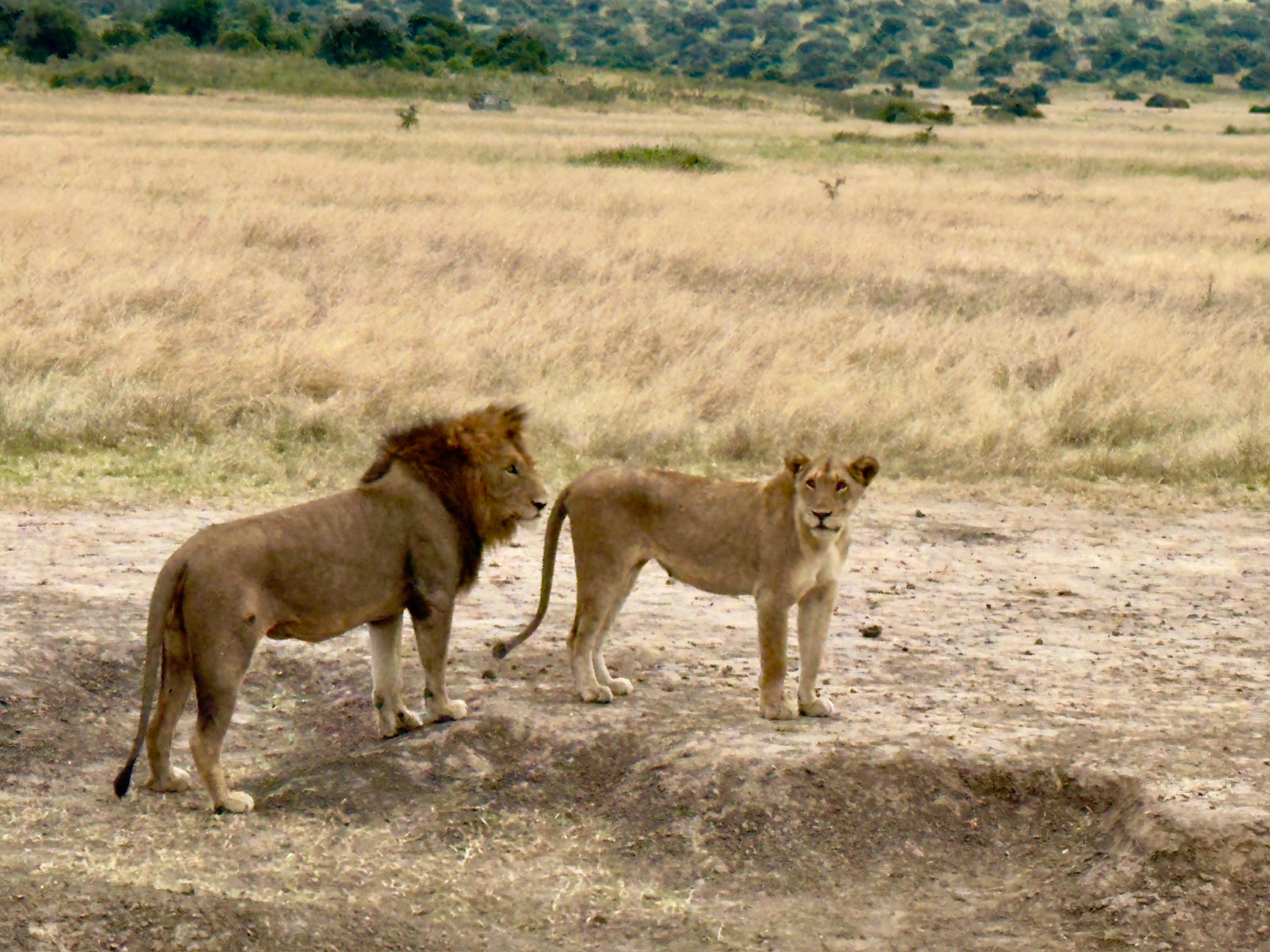
They are not always seen, and in my two previous trips to Akagera I had never seen one. Still, hope lingers quietly on every safari. As we made our way along the trail, three of our vehicles suddenly stopped ahead. When we pulled up, we saw other guides outside their vehicles, making calls and sounds toward the distance. Three lions lay far off, partially hidden by the grass, very aware of us but not particularly interested in moving.
For a while, they stayed where they were — one rolling onto his side with legs in the air as if to underscore just how unimpressed he was by our attempts to coax him into a better view. At a certain point, our guide decided it was important that we really see them. For the safety and privacy of everyone involved, I will simply say this: we had an encounter with those lions that none of us will soon forget.
Some moments on safari you manage to capture with a camera; others — you simply have to let live in your memory.
The Long Ride Back
After that, we continued toward the north entrance of the park. The drive from the north gate back to the villa takes about four hours. The first stretch was the only real experience our students had with Rwandan dirt roads this trip — long, bumpy, and absolutely coated in red dust. By the time we were back on paved roads, everyone and everything had a fine red film on it. It was exhausting and, somehow, absolutely delightful.
We arrived back in the city with just enough time for the students to go straight to dinner, then showers, then packing. Their departure for home was scheduled for the very early hours of the morning, so the house became a blur of activity — zippers, suitcases, last-minute decisions about what to leave and what to cram into overfull bags, goodbyes to those of us staying behind, and the kind of tired giddiness that settles in on the last night of a trip.
When the House Went Quiet
Around 10:00 p.m., they loaded their luggage, hugged their goodbyes, and left for the airport.
Then the stillness came.
My time in the villa ended the way it began: me alone in a beautiful place. But it did not feel the same. On the first night, the quiet felt like anticipation. Tonight, the quiet is full of echoes — students laughing, sharing stories from their safari vehicles, talking about the animals they had seen and the ways this trip had marked them. The villa holds their voices now.
I am tired. But it is the best kind of tired.
Today was a very long and fantastically exciting day.