We headed back out to the Africa Transformation Network (ATN) campus this morning, the vans full of students, supplies, and a quiet sense of “this is the day the work really begins.” Teens were assigned to Bible study, sports, and crafts, scattering across the grounds with their leaders. I walked up the stairs of the administration building toward the room on the upper floor where our first trauma-informed care training with ATN teachers would take place.
The room was simple and bright. Blue chairs lined the walls. The projector sat in the corner, aimed at a white screen. The windows were open, letting in cool morning air and the sounds of the campus below. About eleven teachers gathered with us, along with Jill and me. We sat in a rows with Jill on one side and me on the other, wanting the room to feel more like a conversation than a lecture.
Jill opened the session with a brief introduction to the topic, framing why trauma-informed care matters here and how it connects to the work they are already doing every day. Then she suggested something that turned out to be the perfect way to begin: instead of introducing themselves, the teachers would introduce one another. She and I modeled it first — sharing basic facts about each other and then naming something about the other’s character.
The teachers followed our example one pair at a time. As each person introduced their colleague, they didn’t just list roles or years at ATN. They named faithfulness. Patience. A sense of humor that calms the room. A steady presence for students who struggle. It was a beautiful way to start the day — not only engaging everyone early, but grounding the room in connection and dignity before we ever opened a slide.
What Safety Looks Like in This Room
When it was my turn to teach, I began by talking about safety and felt safety — the difference between being objectively safe and actually feeling safe in your body. I told them that in this room, today, they were safe. Safe to share. Safe to ask any question. Safe to be open about what is hard. You could feel the posture in the room soften as those words settled.
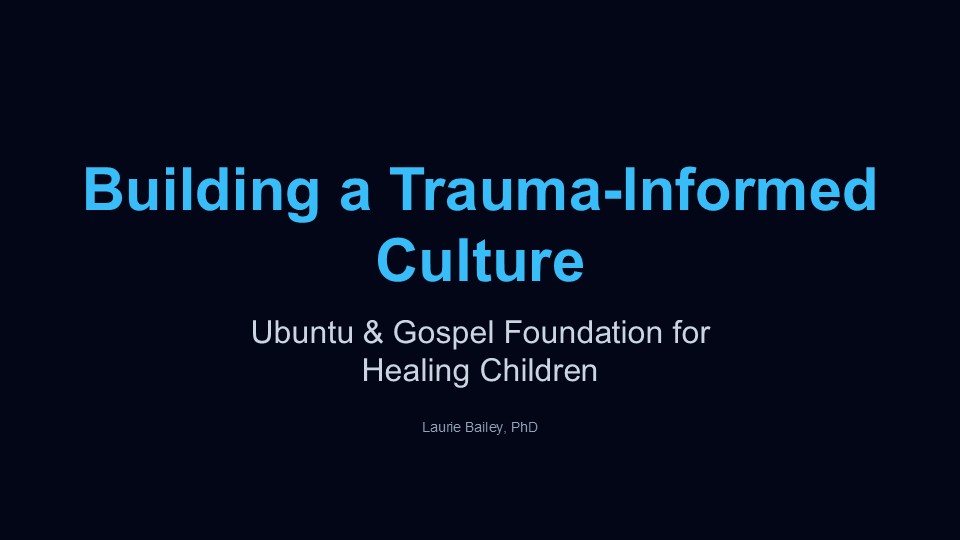
We moved into the presentation. The teachers were fully engaged — asking thoughtful questions, nodding, laughing at moments that felt familiar, and pausing to reflect when something landed deeply. Jill watched with the kind of attentive care that only comes from experience. She would step in at just the right moments to check for understanding, to clarify a concept, or to invite teachers to share how they were already living these principles in their classrooms.
At times it felt like we had done this together a hundred times before. The flow was natural, the handoffs easy. The teachers described how they greet students by name, notice small changes in behavior, look for the story underneath the behavior rather than just the behavior itself. They are already doing such remarkable work; our role today was more about giving language and framework to what they instinctively know than about introducing something entirely new.
After we wrapped up the session, we stepped outside to find the rest of the team and say goodbye to the preschool students who were heading home for the day. Small hands reached out for high fives and hugs. I will never tire of those moments — the squeals of laughter, the shy smiles, the sudden boldness of a child who decides, without hesitation, that you are safe enough to run toward.
These children are not behind. They are exactly where children are supposed to be — running toward connection, running toward joy, running toward anyone who looks safe enough to reach for.
We went back upstairs for lunch: rice, beans, and more fruit than my plate could reasonably hold. I love the fruit here — the sweetness feels unhurried, like it grew in its own time and is now offering itself without rush.
Voices from the Welding Program
We ended that time with the welding students in the center and our team forming a circle around them, praying over their lives, their work, their futures. There was a deep stillness in that room, the kind that reminds you that work like this is never just about programs or skills. It is about people, and the God who sees them.
Football in the Background
Afterward, it was time for the football (soccer) game — a match between the welding students and our team, complete with announcers and music. I was not feeling well by that point and had to lie down in the office, but even from there, with the window open, I could hear the joy. Shouts, laughter, the rise and fall of the crowd’s reactions — all of it drifting in like a reminder that play is its own kind of healing.
On the ride back to the villa, the students talked about the game almost the entire way — the goals, the near-misses, the unexpected skill of one player or another. Now, as I write, the house is in that in-between space of rest and preparation. We are catching our breath before debrief, dinner, and worship to close the night.
Today held training and testimony, high fives and headaches, open windows and open hearts. It felt, in so many ways, like exactly the kind of day we hoped for when we first started planning this trip.