We woke up early this morning to the sounds of the villa coming to life, and to a breakfast that felt both simple and generous. The host and staff had prepared a lovely meal for us, and there was a quiet sense of anticipation at the table. Today was not a training day, not yet. Today was about listening to a story that belongs to this place long before we arrived.
Listening to Rwanda's Story
After breakfast, we headed to the Kigali Genocide Memorial. We chose the self-guided option, giving each person space to move at their own pace. Inside the exhibits, the students were deeply respectful and intentional. They stood for long stretches in front of photographs and timelines, reading carefully. They watched videos without rushing. They moved from room to room slowly, allowing the history of Rwanda to speak for itself rather than stepping in to narrate it for one another.
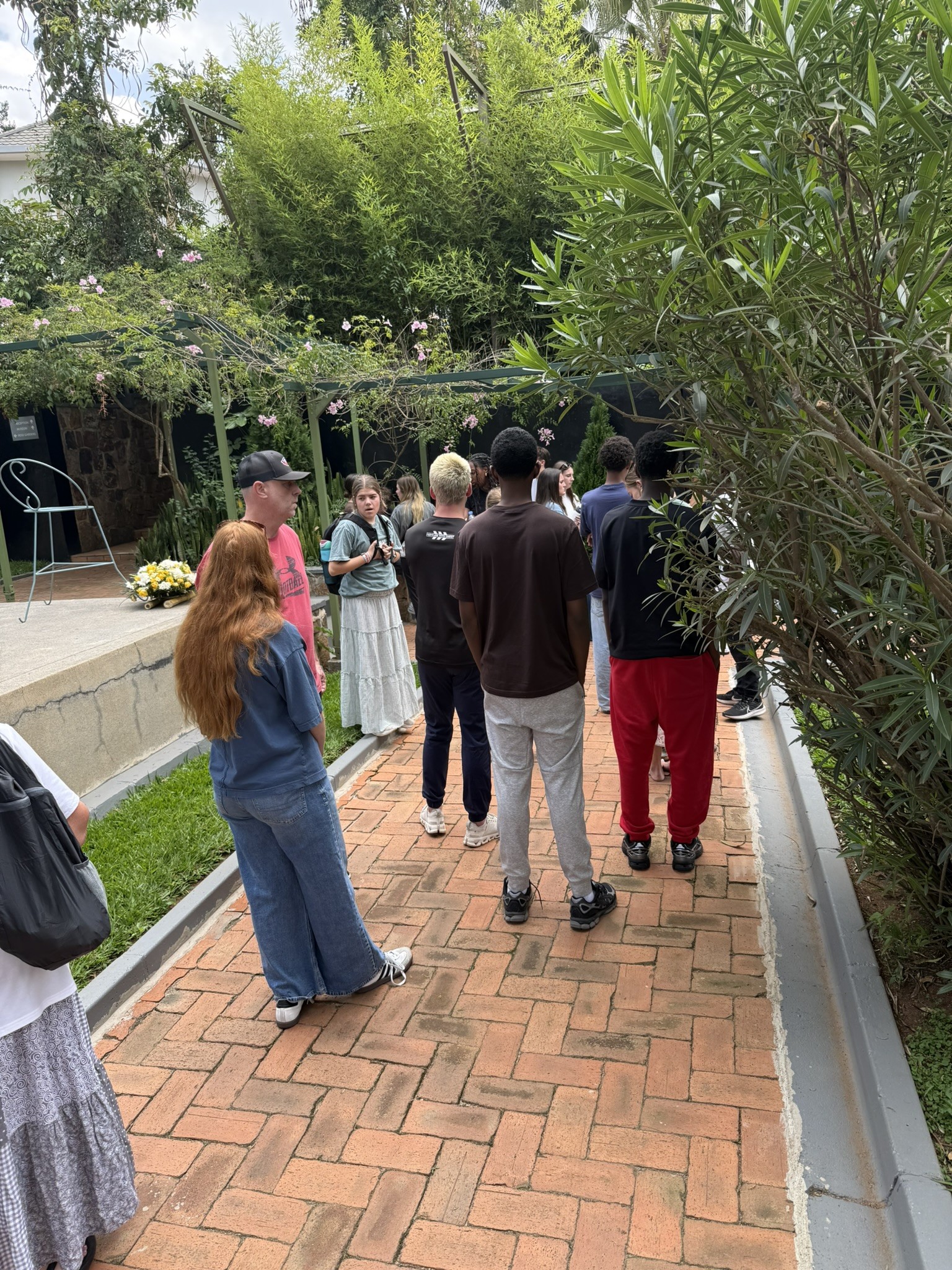
Outside, the gardens were quiet and carefully tended. Some students walked the paths alone. Others stayed in pairs or small groups, pausing at different points to talk in low voices. When we had all finished inside and outside, we gathered under shade trees and sat together. The debrief was not hurried. People shared what stood out, what lingered, what felt hard to hold. There are some stories that require you to stop, sit down, and let the weight of them sink in before you move on.
From there, we went to lunch at Meze Fresh. Burritos, bowls, and quesadillas may not sound like the natural next step after a morning like that, but there is something grounding about sitting together around a table, eating familiar food, and letting your nervous system remember that it is allowed to feel safe even while you are processing hard things. There was laughter at lunch, too. Both can be true at the same time.
There are some stories you do not move past quickly. You sit with them, let them unsettle you, and allow them to change the way you show up in the world.
The Weight of Ntarama
After lunch, we loaded the vans and drove to the Ntarama Genocide Memorial. Since my last visit, they have made considerable improvements to the site. The paths are clearer, the spaces more organized, the storytelling more structured. But the atmosphere has not changed. The reality of what happened there, and the impact it still carries, remains just as present. Our group moved through the spaces with the same quiet attention they had shown at the Kigali Memorial that morning.
There is a particular kind of stillness that settles over a group after spending time in places like these. It is not the silence of disengagement. It is the silence of people who know they have just encountered something sacred and irreducible, and are trying to honor it by not rushing past.
We returned to the villa in the late afternoon. The rest of the day was set aside for discussion, worship, dinner, and, finally, a chance for real rest. The conversations continued — around tables, on couches, in small circles scattered throughout the house. People named what they had seen, what they were carrying, and where they sensed God’s presence in the midst of such painful history.
Tomorrow is our first day on campus for training and leading groups and sports camps. Today, we were students — listening, learning, and letting the story of this country shape the way we will show up in classrooms, on fields, and in every conversation that follows.
Some days on these trips are about what we offer. Today was about what we receive.