Church was a four-minute drive from the villa. We pulled into the lot as the only vehicles there, the building quiet in that way Sunday mornings often are just before everything begins. When we walked inside, we were warmly greeted and led to seats near the front. The church felt like a young congregation — a few years into its life, still growing and finding its rhythm, but already full of love for Jesus.
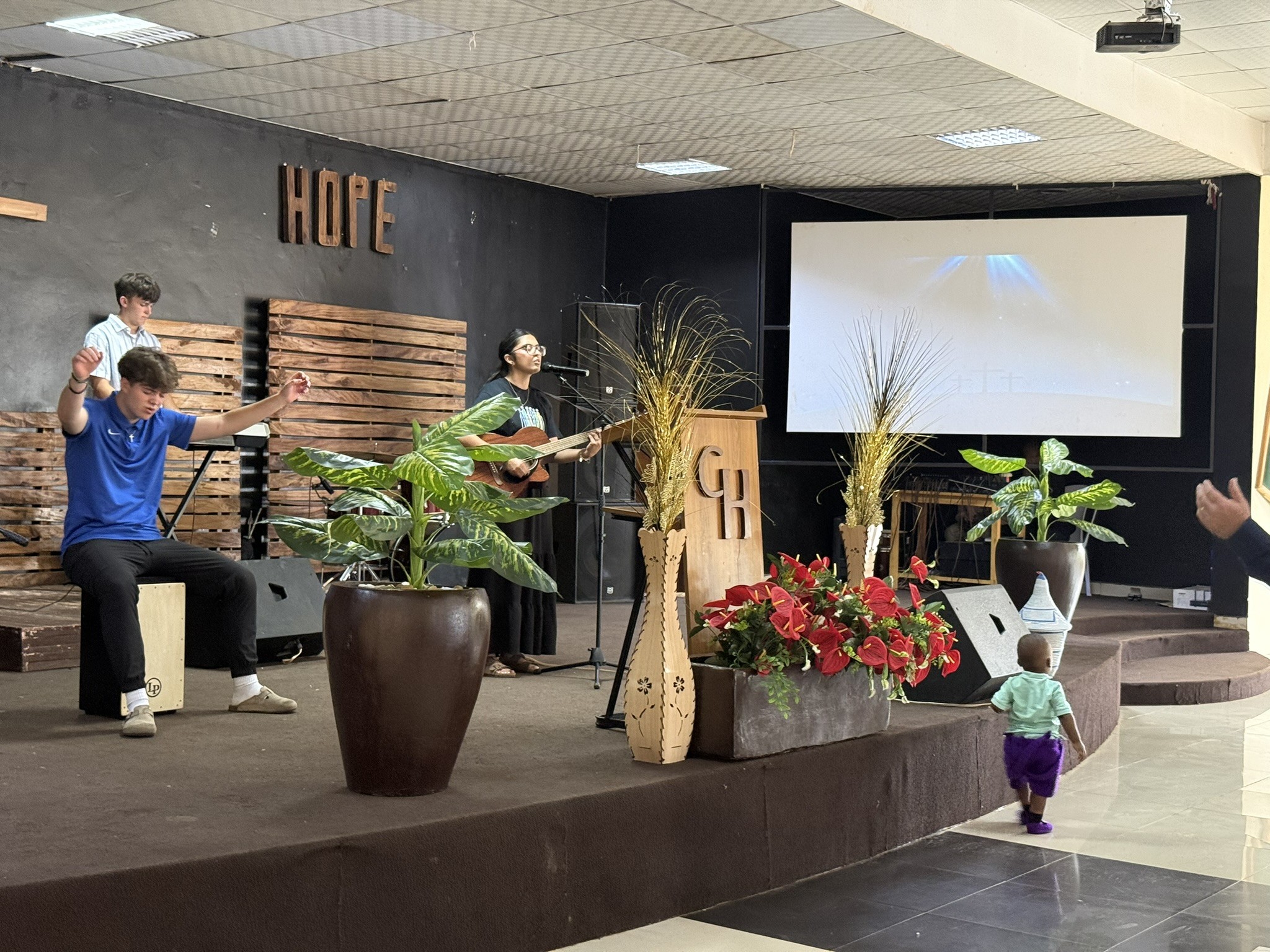
This morning we stayed for both the English and Kinyarwanda services. Our worship band had prepared three songs, and Chris would be preaching at both. As the local worship team stepped onto the stage, their band began to play. Song after song, the room filled with praise — familiar truths, new melodies. After three or four songs, the worship leader invited our band up. They led three songs as well, each one a proclamation of praise and love for Jesus, though the tempo, tune, and volume shifted noticeably between the two bands. Different styles, same Savior.
When the music ended, we prayed, and Chris stepped up to preach. He shared the message in English during the first service, with careful attention to clarity, and the congregation leaned in. When he finished, the room responded with clapping and the service came to a close.
Children in the Space Between
In the space between the English and Kinyarwanda services, the children arrived.
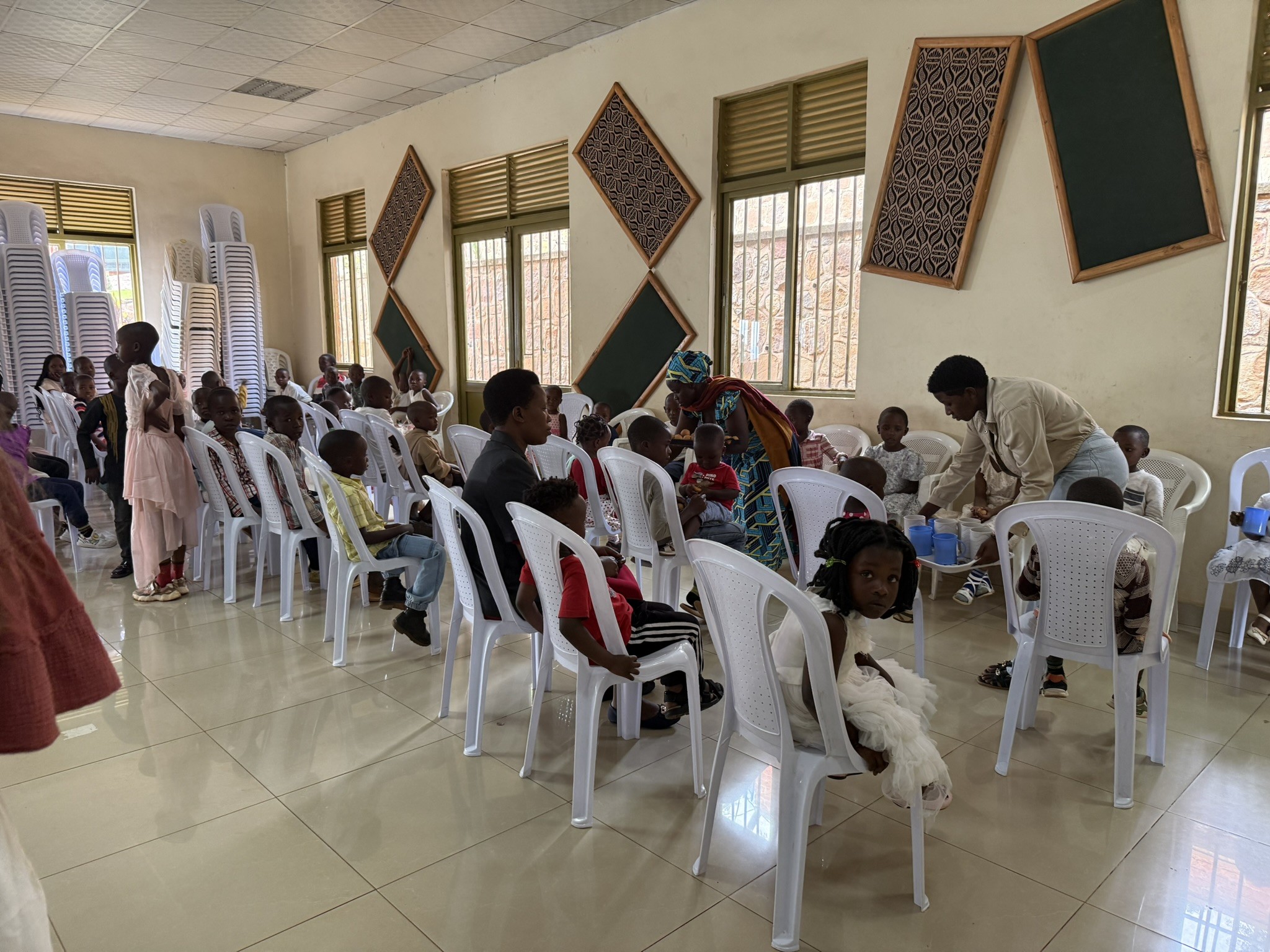
Sixty or more preschool-aged children filled the chairs, waiting patiently for their snack — hot tea and mandazi. The room felt suddenly smaller, in the best way. Smiles, sticky fingers, shy glances that quickly turned into bold ones, and hugs that came without hesitation. Oh, how I love the hugs of these little children.
This is not just a reality for the church, but a parallel for this journey and life in general. Children are a bridge that brings people together.
Children stood in the space between services with hot tea and mandazi, reminding us that sometimes the most powerful bridge between people is a small hand reaching for yours.
As the time for the Kinyarwanda service approached, the band began to play again. The melody was familiar, but the language and expression were different. The same song we had sung in English took on a new richness in Kinyarwanda — joyful, full of movement, and just a bit louder. The worship felt woven into the fabric of the congregation’s life together, and we were invited into it.
Java House and Shopping at the Markets
After church, we returned to the villa to change clothes and catch our breath before the rest of the day. Then we headed out to Java House for lunch. Cheeseburgers, French fries, and milkshakes or specialty drinks covered most of the table. It was a taste of home in the middle of Kigali, and it was delicious.
From there, we took the students to exchange money and buy souvenirs. They wandered through shops and stalls, asking questions, comparing options, and choosing small pieces of Rwanda to carry home — handmade items, artwork, clothing, little gifts for family and friends. By the time we headed back to the villa, the bags were fuller and so were the students. They returned with full souls and a good bit of treasures — both visible and invisible — and the kind of tired that comes from being fully present in a place that is slowly working its way into your heart.
Today was not a day of formal training or structured sessions. It was a day of worship, of children’s hugs, of shared songs in different languages, of burgers and mandazi, of markets and memories. A day that reminded us that ministry is as much about being with as it is about doing for.
They walked away from Sunday with arms full of souvenirs and hearts full of something harder to name but easy to feel — a deep, quiet sense of being welcomed in.