I woke up this morning before my alarm, ready for the day — and then had a brief moment of panic. As I double checked the schedule, I saw my name listed as preaching in worship. My heart sped up before I remembered the switch we had made. I am actually speaking on Wednesday morning, not today. A quiet “whew” and a deep breath later, I settled in to review my presentations for the day, then headed out for breakfast and worship.
Homework from Genesis and Morning Training
After worship, Francois approached me with what he called “homework.” He quoted Genesis 6:6 — “The Lord regretted that he had made human beings on the earth, and his heart was deeply troubled.” He asked me to consider that verse in light of this week’s theme: “You’re called to transform others.” It was a weighty invitation, and I told him I would sit with it. Then I headed back to my room to grab a few things before my first session of the day — a training with the matrons and patrons.
I arrived at the fellowship hall around 8:55 a.m. to set up. Today I would use the full three hour presentation I had prepared. The logistics were a bit unusual. I sat at a corner desk with my computer hooked to the HDMI cable, several feet away from the group. Eleven matrons and patrons sat in a wide circle toward the front of the hall, facing the projected slides. It was the only way to make the technology work, but it meant I was speaking a little from the side instead of the center.
We began with the foundations of trauma informed care. As I presented, they asked thoughtful questions, sometimes seeking clarification, sometimes offering it to each other. Two of the men volunteered to role play a scenario, and the group gave feedback. It was clear they were not just listening; they were actively trying to apply what we were discussing to their daily work with students.
We took a short break, and when they returned, we moved into the principles of trauma informed care and how those show up in a boarding environment — safety, trustworthiness, choice, collaboration, and empowerment. After another 30–40 minutes of discussion, it was time for a second break while the matrons and patrons took their breakfast. The break stretched a bit longer, but they came back promptly and ready to finish.
I realized I had skipped something I love to do at the beginning of a session — having participants introduce one another. So as they settled back in, I had them pair up and do introductions, modeling it myself first. Even though it came at the end instead of the beginning, it still created a sense of connection. Overall, the session went very well. When we finished, it was time for lunch.
Lunch and a New Session for the Nurses
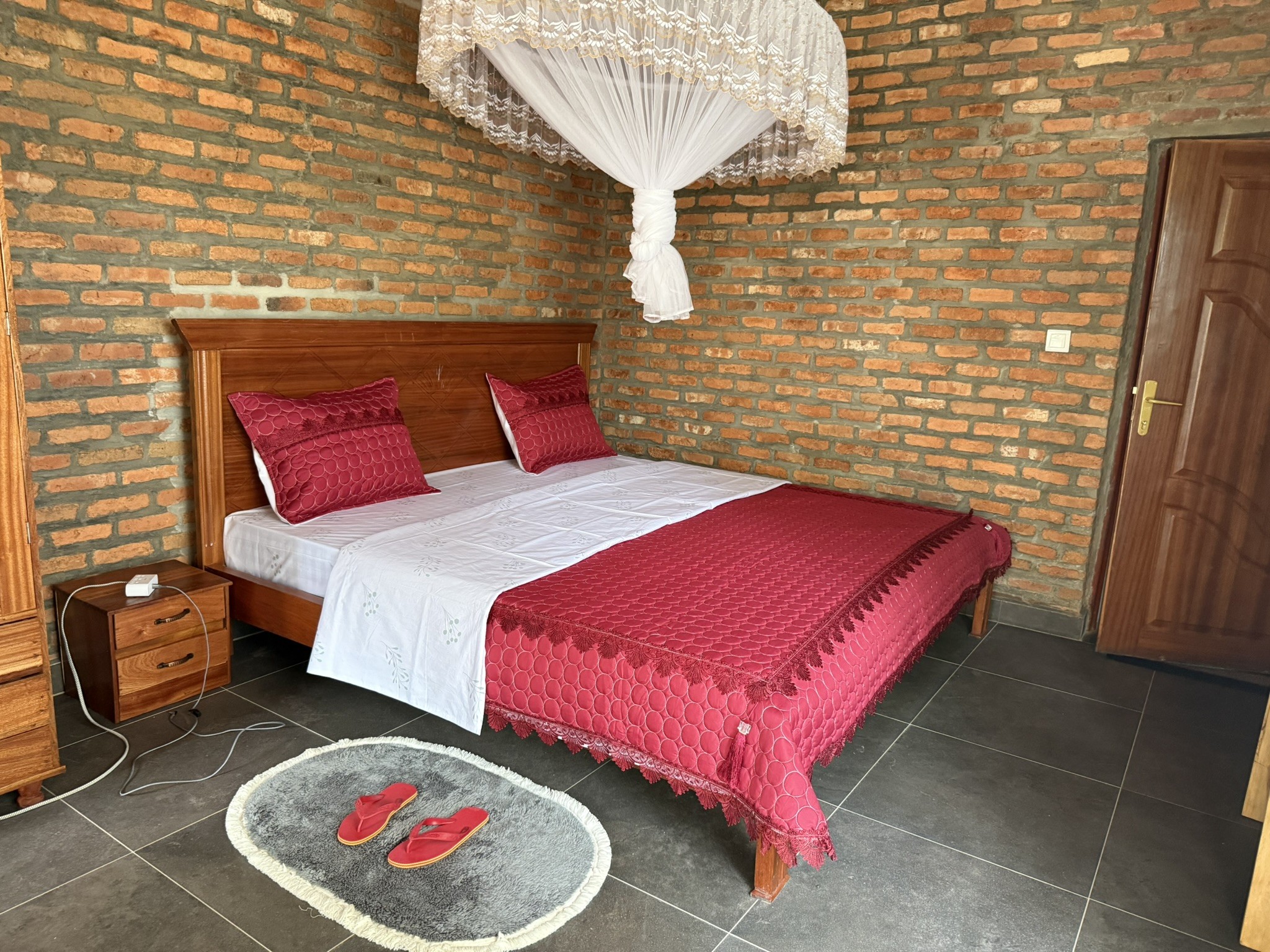
I walked back to the guest house for a quick refresh. Once again, I have new linens and a new bedcover, but I also have a new chair and desk. I am overwhelmed with the care provided here. I quickly dropped my bag and headed to the dining room, where — as always — lunch was wonderful.
Jerome joined us at the table, and we had a rich conversation. Part of his role involves oversight of the girls in the sewing program, so I took the opportunity to ask about his hopes for my time with them. Both the parents in the Child Malnutrition Program and the teen mothers in the sewing program occupy a significant portion of my schedule on this trip. I wanted to make sure I was meeting the needs and hopes of the leaders who carry those programs long term, not just delivering what I thought might be helpful.
After lunch, I had only a brief pause before my next session — a meeting with the nurses and midwives at 2:00 p.m.
Trauma-Informed Care in the Clinic
As I started up the road, one of the nurses, Theo, came to meet me. We walked together to the space that has been converted into their prayer room. Four years ago, I sat in that same spot talking with some of the mothers in the sewing program. Now it is enclosed and set apart as a quiet place for staff to meet and pray.
We had two hours together, and this presentation was highly tailored — trauma informed care in medical settings. The conversation quickly became more clinical, in the best way. We talked about how trauma affects the body, how to recognize survival responses in patients and families, and what it means to provide care that does not inadvertently retraumatize. Their questions were specific and insightful, and the language they used reflected real practice — triage decisions, labor and delivery scenarios, malnutrition clinic visits. Because the dialogue was so rich, I did not make it through all of the slides, but that felt like the right trade off. Before we ended, they asked if we would meet again. When one of the nurses checked the schedule, she saw we only had 45 more minutes together later in the week. I told them I would talk with Devotha and Sabine about finding extra time.
After we wrapped up, I stopped by Devotha’s office. Our conversation ranged over a lot of ground, including the nurses’ request for more time. She quickly worked to set up a time for Sabine (the clinic director), Jerome, and me to meet and adjust the schedule so we could carve out more training space for the nurses and midwives as well as confirm anything they may have wanted for these sessions. It is a gift to work with leaders who are as committed to this work as the staff are.
Conversation Corner and Uno with Students
By then it was almost time for Conversation Corner. As I walked toward the secondary school, I remembered that I had promised the 8th grade group we could play Uno tonight. I quickly sent a few messages asking if anyone had a deck of cards. Naomi came through. She met me on the way, Uno deck in hand.
We first went to the place where Naomi had been meeting her group, thinking that was where my students might be, but as my group started to gather, we moved to the usual Conversation Corner spot. We sat together on the ground. Before pulling out the game, I talked briefly about encouraging one another — how we speak, how we listen, and how even something as simple as a game can be a place where people feel seen or unseen.
Some questions will never be asked in a circle of eighty students, but given a little time and a smaller space, they come pouring out like water that’s been waiting behind a closed gate.
When I finally pulled out the Uno cards, the students lit up. We divided into two groups of eight and split the deck. We managed to play two full games before it was time for them to head off for showers and the rest of their evening routines. As I walked back toward my room, I passed several students along the path. It is a good feeling when faces start to become familiar and names begin to stick in your mind.
Some of the most significant work happens in rooms no one photographs — a circle of matrons, a converted prayer room with nurses, a handful of students sitting on the ground with a deck of cards.
Uno, Laughter, and a Full Heart
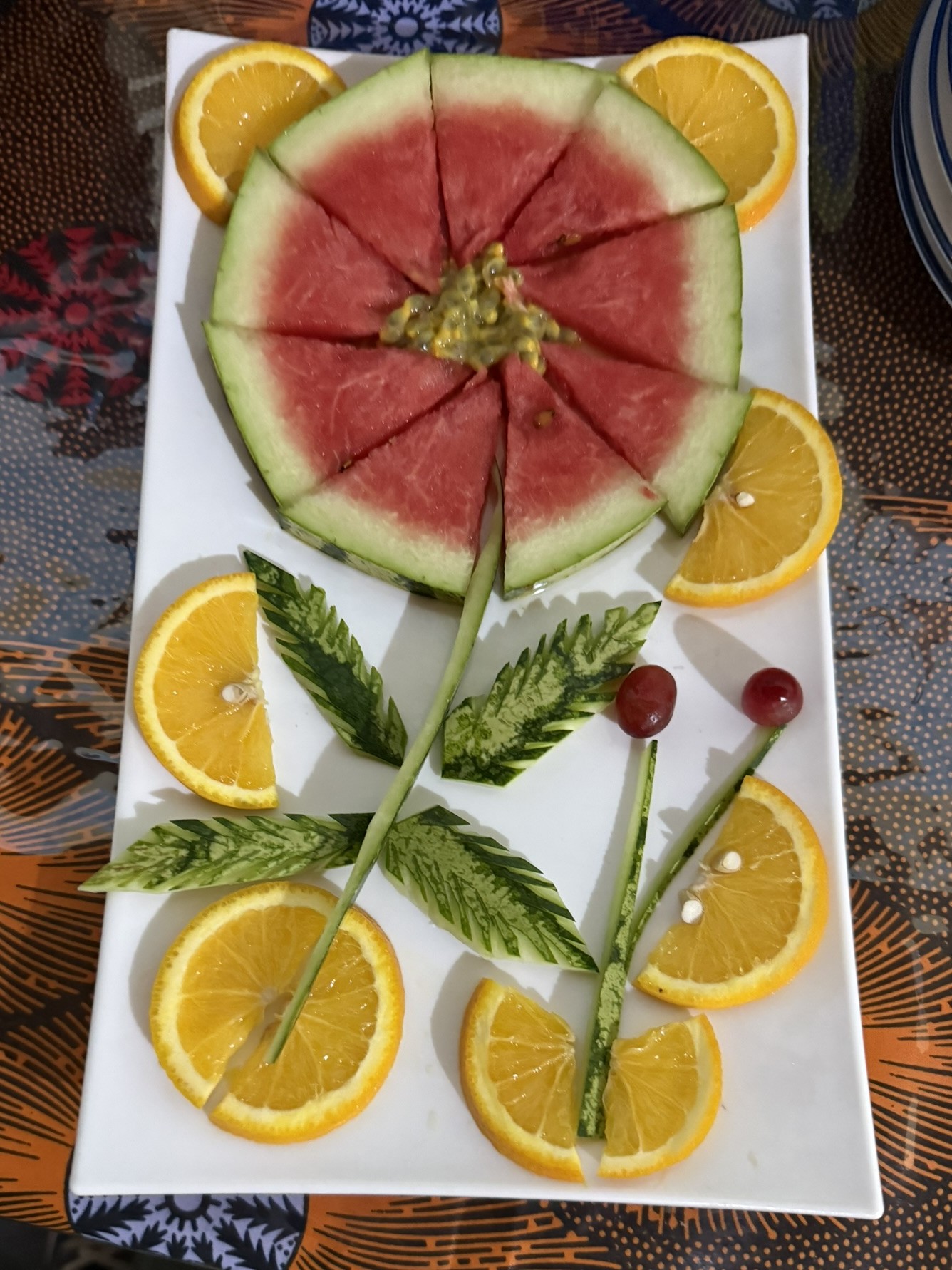
After a short break, I went to dinner. John and his staff had prepared another lovely meal, complete with a fruit dessert arranged in the shape of a flower. He is so artistic and thoughtful in how he presents food; it feels like a quiet act of celebration at the end of the day.
After dinner, the games continued — this time for the adults. John had said he wanted to play Uno with us. Londyn brought Uno Flip, which she and Naomi clearly knew better than I did at first. John invited his friend Jimmy to join us. We explained the rules to Jimmy while he finished his dinner, and then he joined in. After two games, another friend, Fred, came and sat down, and we played two more rounds.
We laughed so hard around that table. The kind of laughter that makes your sides hurt and your shoulders relax. I am thankful for those small moments — card games, shared jokes, playful competition — where you can see, so clearly, the life and love people here have for one another and the way they are so willing to fold us into it.
We laughed so hard over Uno that for a while the only thing in the room was joy, friendship, and the quiet miracle of feeling at home far from home.
Tonight, I’m going to bed tired but full — of conversations, questions, laughter, and gratitude.