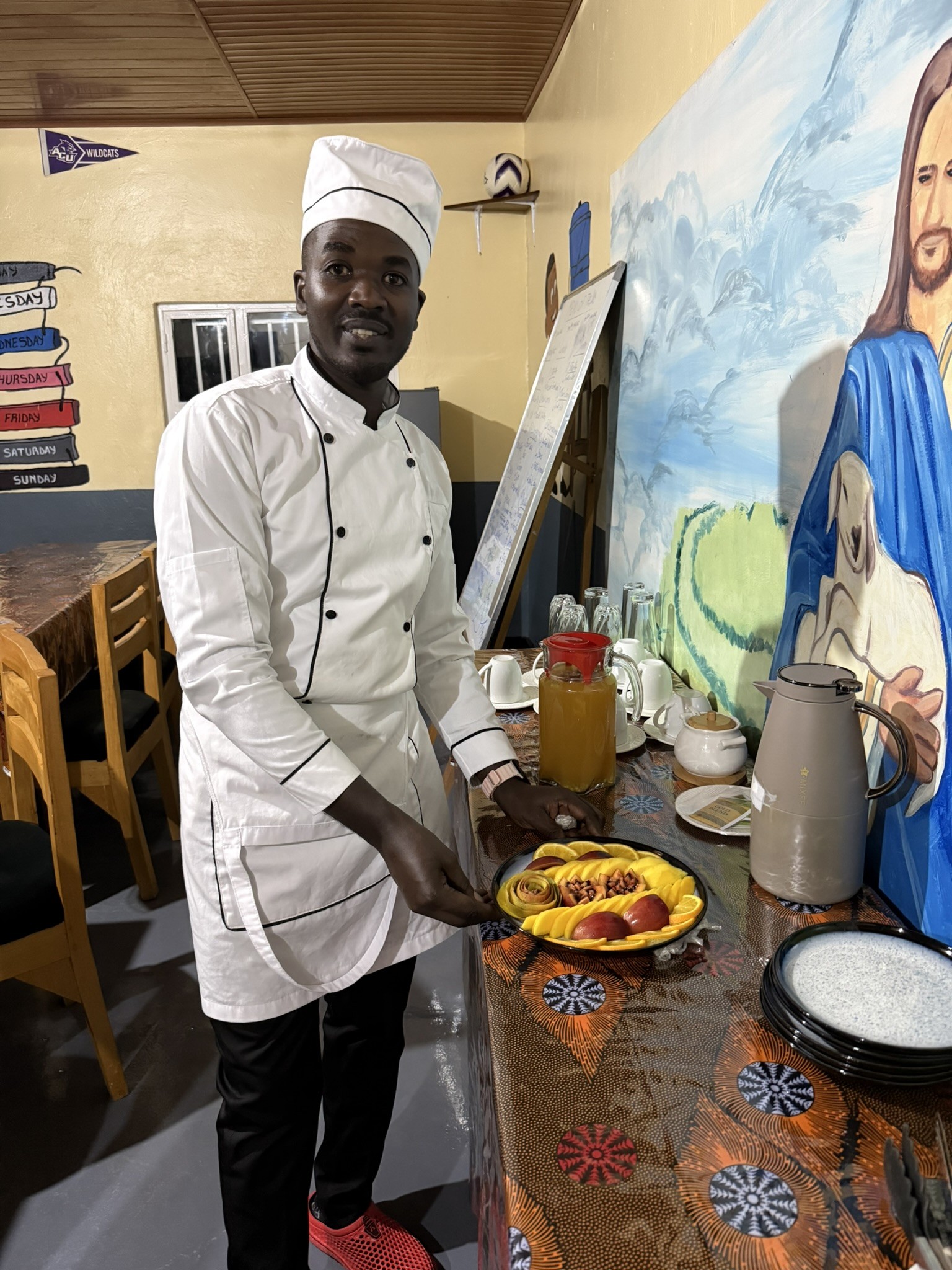
This morning started quietly. I arrived to breakfast and found John sitting in the garden. I told him not to get up. I needed a picture of this! I ate breakfast alone for the first time this trip. Neither Naomi nor Londyn came in, and as the minutes passed I grew more and more concerned. After I finished eating, I walked over to their house to check on them. Naomi was still asleep, and Londyn was clearly not well. I do not know exactly what illness has hit them, but we are praying for a quick recovery for both.
Checking on the Girls and Heading to Chapel
From there I headed to chapel. Today, François brought the lesson. He is a fantastic preacher — thoughtful, grounded in Scripture, and so clearly caring toward the students and staff. After chapel ended, he came over to check in with me and asked, “How are your daughters?” It made me smile. It is sweet, and also quite accurate; Naomi and Londyn are near the age of my own child, and in many ways they have felt like daughters on this trip.
After chapel I met Josiane, and together we walked down to meet with the mothers in the Child Malnutrition Program. Today was cooking day with them. As we approached, we heard the welcome song drifting out, and my heart lifted. It is always so good to see them, to see familiar faces and new ones gathered with their children.
Today I was directing the cooking portion. Josiane told me what ingredients they had and then asked, “What are we going to make?” With my vast knowledge of Rwandan cuisine (insert eye roll here), I thought of the one thing that made sense with those ingredients and suggested imvange — a Rwandan stew of Irish potatoes, beans, greens, and mixed traditional starches in a tomato base. The one time I’ve had it this trip, it was delicious, so it felt like a safe (and tasty) choice.
As she and a few of the women began preparing breakfast, Josiane told me I could go ahead and continue my lessons. The only problem was that I had not prepared anything formal for today. No notes, no slides, not even my laptop. So we did what many of the best moments on this trip have required: we winged it.
I welcomed the mothers and told them that today I simply wanted to visit with them and answer any questions they had. They did not disappoint. They told stories of reaching out to children who had left home and having hard conversations of reconciliation. They shared how they are trying to teach their husbands this new way of thinking about connection and correction. Josiane even shared a story of her own. The room felt full — of honesty, courage, and the kind of quiet strength that grows in small, everyday choices.
Cooking with the Mothers
Eventually it was time for breakfast. We passed out plates with hard-boiled eggs, bread, and biscuits, along with cups of porridge. As they ate, I transitioned to kitchen duty and began peeling potatoes. And my goodness, did we have potatoes. These were fresh from the ground — the red Rwandan dirt still clinging to them.
We had only knives to work with, so I peeled and peeled. After a while, some of the mothers came out to help. Then more joined. At one point I looked up and there were at least ten of us peeling potatoes, with others standing around talking. One of the nurses said, “They have questions about life in America, if you are willing to answer.” I told her I absolutely was.
At one point I looked up and there were at least ten of us peeling potatoes together, talking about life and laughing — the kind of kitchen table community you can’t plan, only receive.
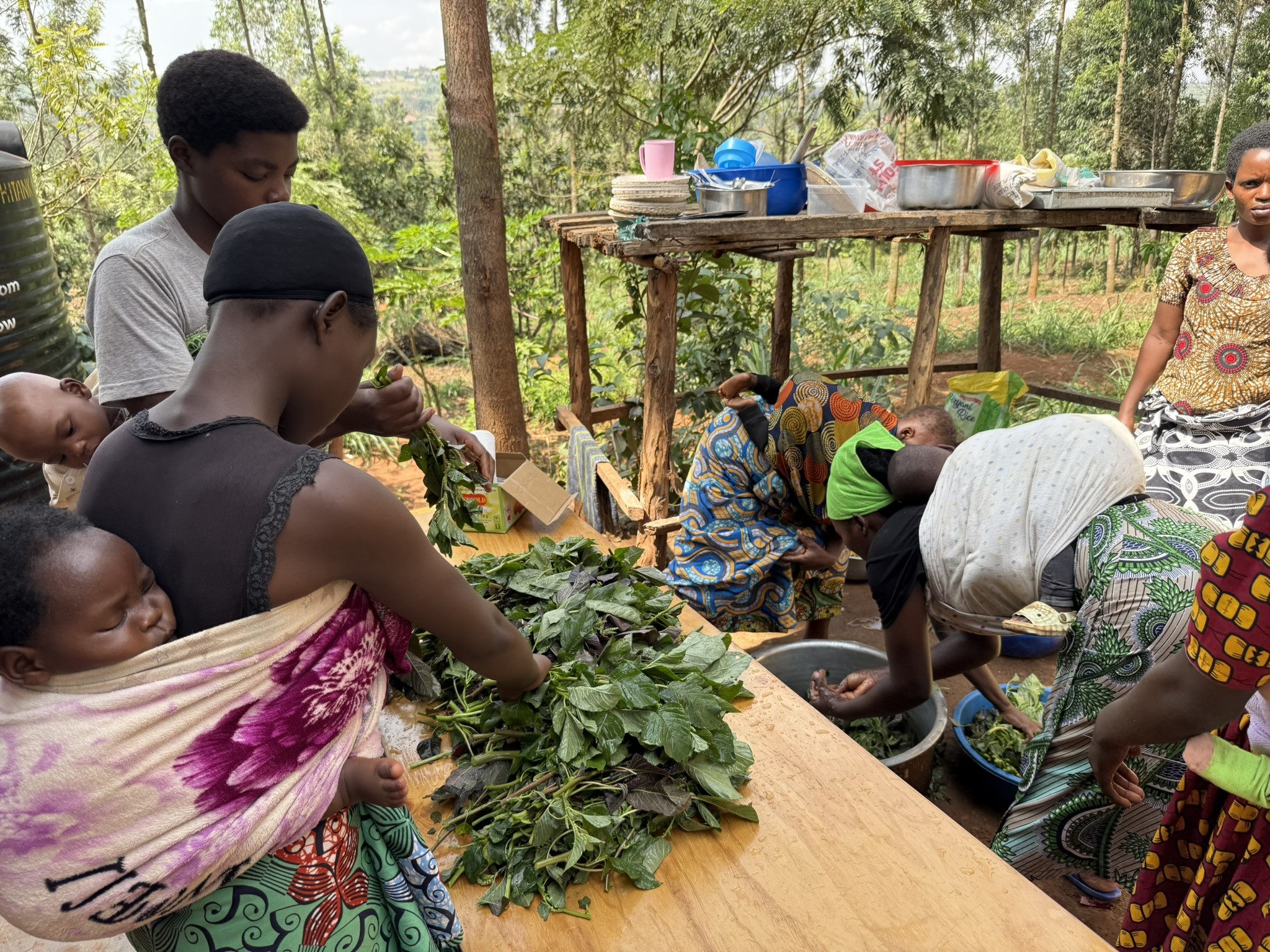
They asked me if we have these same vegetables in the United States. I told them that we do. They were surprised. I explained that in the States we often call these “new potatoes” and that we typically don’t peel them. We talked about vegetables, families, and daily life. The conversation moved easily while our hands worked. When we finally finished peeling and I went to wash my very dirty hands, several of the mothers told me they loved me even more now. I can’t think of a higher compliment than being welcomed into both their stories and their kitchen.
Next we transitioned to cutting greens. As I chopped, one of the nurses said, “You are very used to working in a kitchen.” I smiled. We chopped the smallest white eggplants I have ever seen, along with the greens and other vegetables, until everything was ready.
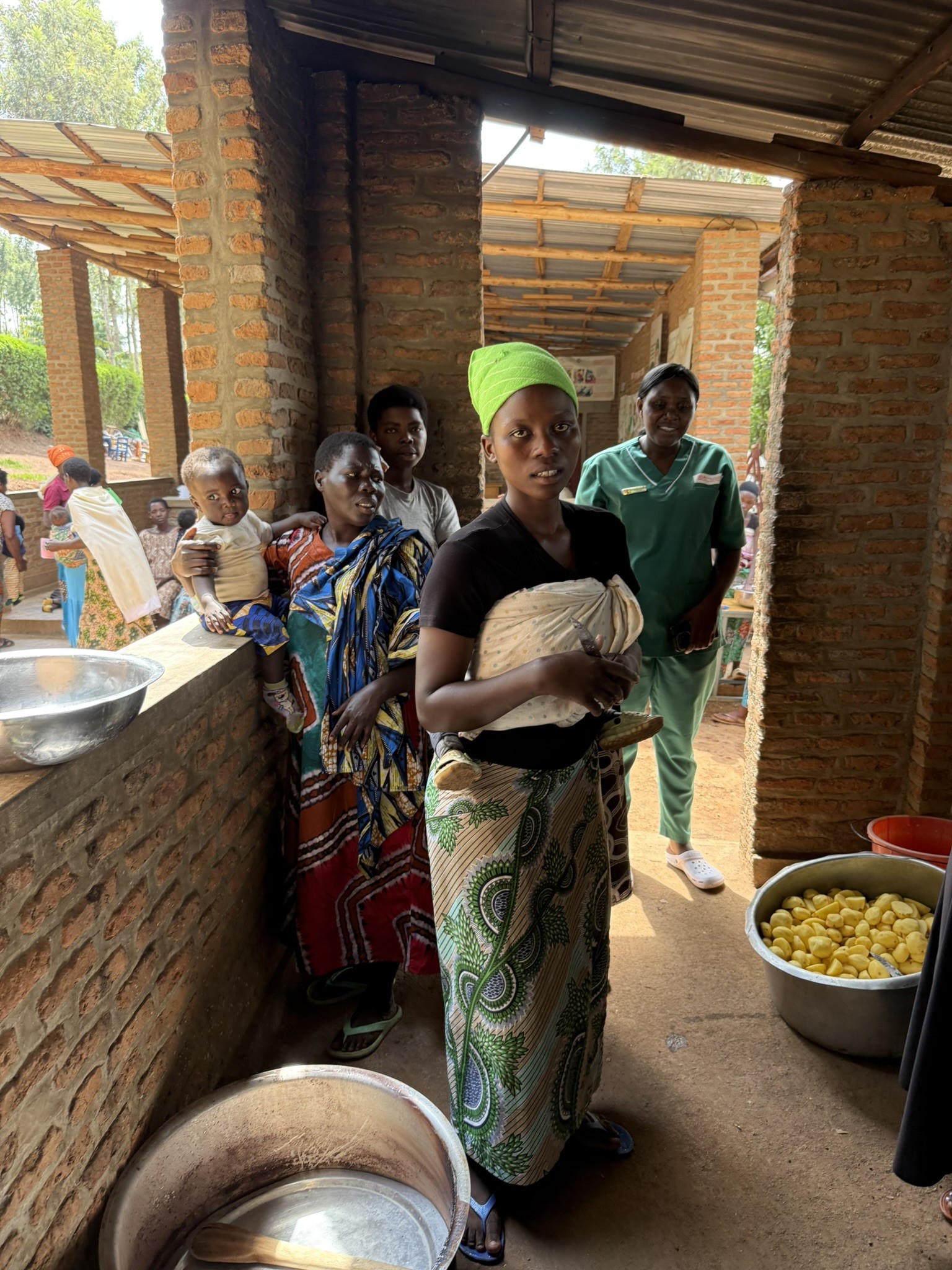
We cooked over open flames. Before placing the pots — or perhaps “vats” is the better word — onto the stoves, they coated the outsides with mud to keep the black soot off the metal. Once the pots were ready and set in place, I poured in the oil… and immediately realized I had poured in far too much. We laughed, scooped some back out into a bowl to use in the second pot, and carried on. We added the ingredients and let everything come to a boil, the steam rising into the morning air.
I stayed with them until noon. They invited me to stay and eat with them, and I know what an honor that invitation is. I would have loved to stay, but my schedule for the afternoon wouldn’t allow it. As we walked back, Josiane told me how much she had enjoyed our time with the mothers. I agreed. It felt like one of those mornings that will stay with me for a very long time.
The fastest way into someone’s heart is often through shared work, not perfect words.
Afternoon Meetings and Conversation Corner
At lunch in the guesthouse, I wondered if I might be alone again, but Jerome joined me. We had a lovely conversation — the kind that moves between family, work, and what God is doing here — and the meal passed quickly.
At 2:00 p.m., I had a meeting with François and Josiane to review the guidance documents I had written on courtship and relationships. I’m still not entirely sure whether I was meant to provide training in those two meetings or simply offer the documents for review. But Josiane has been present during my sessions with both groups of mothers, and François was there the last time I presented this content and will be at the leaders’ training next week. In any case, the time felt well spent — clarifying language, hearing their perspectives, and making sure what I had written fits the context here.
From there, I quickly headed to the Health Post to meet again with the nurses and midwives. This session blended general trauma-informed care with more clinical, case-based scenarios. We talked through how trauma shows up in bodies and families in medical settings and what compassionate, non-retraumatizing care can look like in the clinic. The session seemed to go well. Before we finished, they asked if we could talk about compassion fatigue in our final meeting together. It was a good and important request.
I answered a few last questions and then realized I was late for Conversation Corner. I excused myself and walked very quickly to the high school, arriving only a few minutes behind schedule. Today was the first meeting with a new group — another set of 7th graders. They were fun from the start.
As always, we began with introductions of each other rather than themselves. They did beautifully, sharing one another’s names and small details. Then I gave them options for how to spend the rest of our time. They chose questions. So we spent the remainder of the session in conversation, with them asking and me answering. We were so engaged that I didn’t notice the time until we were five minutes over. When I realized, I asked what game they wanted to play at our next meeting and then invited one of the students to pray. He did, and we closed our time together.
I left the high school with a bit of a pep in my step. I dropped my backpack off in my room and took a brief pause before dinner. When I arrived at the guest dining room, Naomi was there. She told me that Londyn had asked her to eat her dinner at the guesthouse so she wouldn’t have to eat alone, since Londyn still wasn’t feeling well. That small act of solidarity says so much about who they are.
Dinner and Notes on the Porch
Louise joined me for dinner tonight. The meal was delicious, and our conversation was warm and thoughtful. I am grateful for how many staff members here have taken the time to sit, share, and let their stories unfold across a table.
On my way back to my room, I stopped to check on Londyn. Then, instead of going inside, I sat on the porch with my notebook and began working on these field notes in the cool evening breeze. The campus was quieter, the air softer, and as I wrote, I felt again how deeply I love this place and these people.
Today was full — of questions, potatoes, laughter, guidance, and goodbyes that were really just “see you tomorrow.” I am tired, and I am thankful.